
Why clicks and impressions are marketing's most misleading metrics
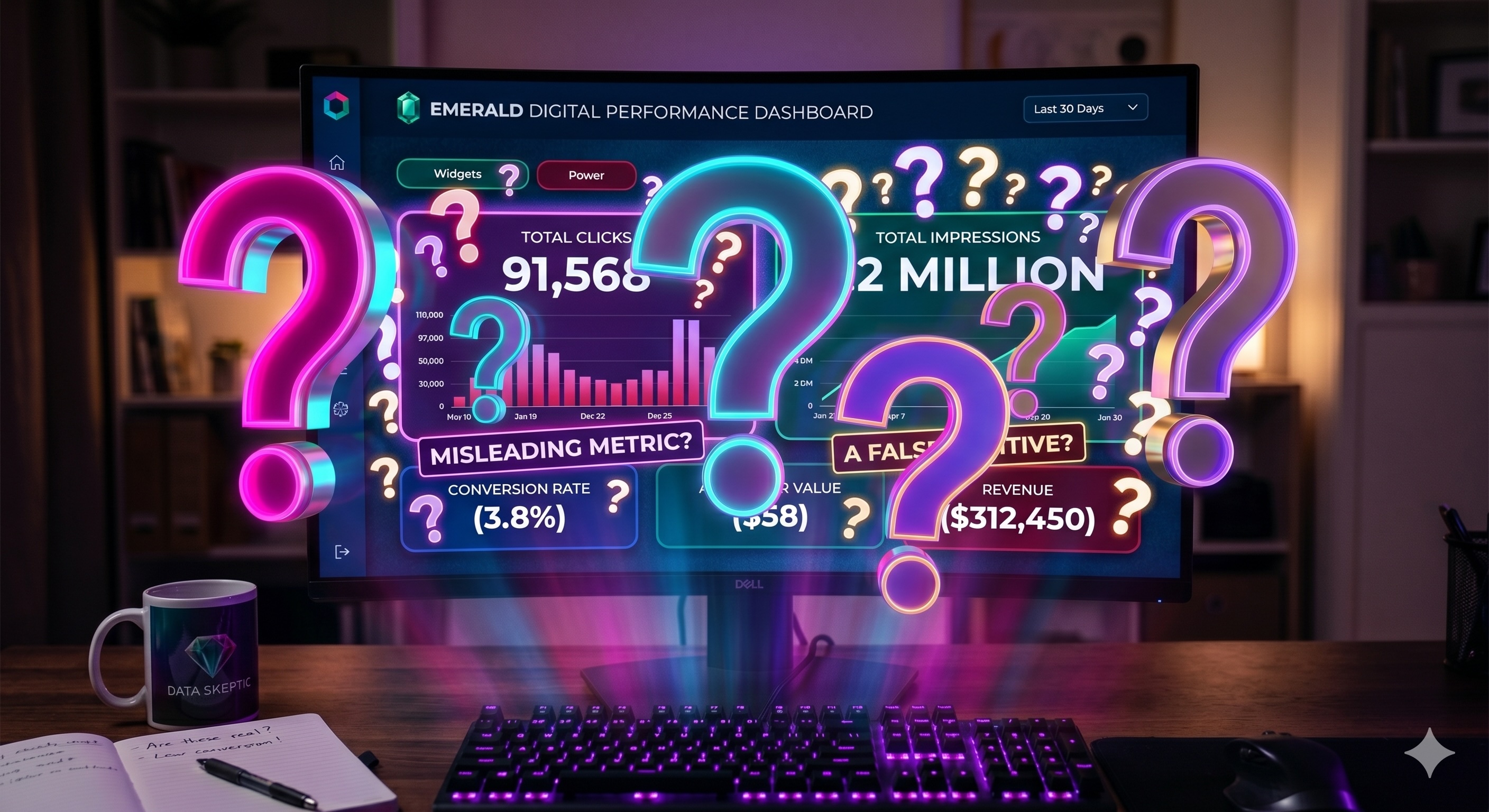
When Google introduced its AI Overviews, the company described the goal as “taking more of the work out of searching, so you’ll be able to understand a topic faster, uncover new viewpoints and insights, and get things done more easily.” For users, this was a clear improvement. A quick answer often no longer meant clicking through a handful of links to find what they were looking for.
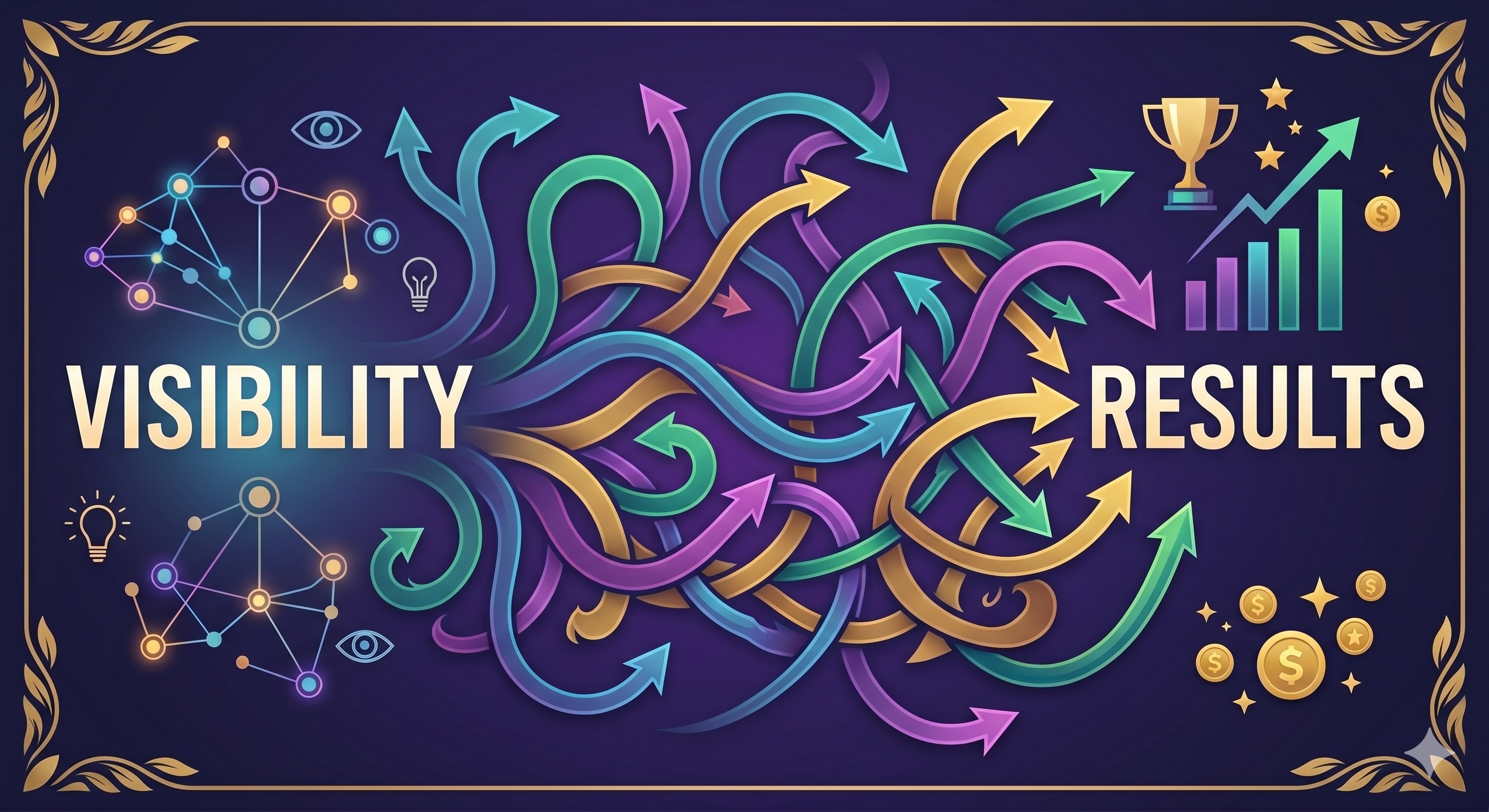
But for marketers, it was a fundamental decoupling of visibility and traffic. A brand could now be seen, cited, and even influential – without ever receiving a click. This had already been in the works: the term “zero-click era” began to emerge in 2023, adding AI search results to a long list of existing non-owned content like product reviews and Reddit threads that seemed to threaten the control that a brand has not just over its own narrative but its ability to measure success (or lack thereof).
It’s not just anecdotal: Bain & Company found in 2025 that over 80% of consumers are getting their answers from zero-click results at least 40% of the time. Software company SparkToro has found that over 60% of Google searches do not result in a click. Meanwhile, reporting from Digiday documented how publishers are already feeling the impact, with declines of as much as 25% in organic traffic tied to AI summaries and answer engines. While Knotch’s research has found that audiences who used AI as part of their journeys to a brand are 4x more likely to convert, the fact that they often aren’t arriving with a simple click can be alarming.
The reality is, clicks have always been flawed. We’ve known it. And it’s long past time to move on, because it’s finally become clear that clicks are a metric for an internet that no longer exists.
What about impressions?
When clicks become less reliable, impressions often take their place. On paper, they look like a reasonable proxy – after all, they suggest reach, presence, and scale. But impressions have always been a weak signal, and in an AI-mediated environment, they’re weaker than ever.
Even in their heyday, impressions have never told you if your content was read, understood, trusted, or acted upon. Nor have they told you if it shaped a decision, or even if it was meaningfully seen. At the same time, the audience journey itself has become far more fragmented, no longer unfolding in a linear sequence and rarely contained within a single session or channel. A user might encounter your brand in an AI-generated answer, revisit it through organic search, validate it through third-party content, and return days later by typing your URL into a browser window. Each interaction plays a role, but none of them, on their own, tell the full story.
We’ve been here before. A decade ago, the industry began to reckon with the reality that clicks and impressions had some serious issues – mostly because better ways of measurement had begun to emerge. Engagement metrics like time on page and scroll depth became more nuanced alternatives, built on the idea that what happens after the click matters more than the click itself. And for a while, that shift felt like progress.
But over time, many of those metrics proved just as incomplete. They told us whether content was consumed, not whether it was meaningful. And so, quietly, many organizations drifted back to what was easiest to measure: clicks, impressions, traffic.
The problem today is that those metrics have gone from incomplete to actively misleading. They capture moments rather than momentum, and they track touchpoints along a journey while often being unable to track the path that connects them. And as a result, they tend to overvalue what is easiest to observe while undervaluing what is hardest to track. This is why teams often find themselves optimizing for what looks good in a dashboard rather than what actually drives outcomes.
So, what actually works?
Clicks and impressions have persisted despite the fact that they’re so obviously flawed, and that’s because they’re easy – and they’re entrenched. They’re universally understood. They’re built into every analytics platform. And perhaps most importantly, they align with how organizations have historically been structured – around channels, campaigns, and discrete reporting periods.
Changing the metrics means changing the model. It requires moving from isolated measurement to a more connected understanding of how content drives behavior over time. And that’s a much more complex challenge, but it’s also a necessary one.
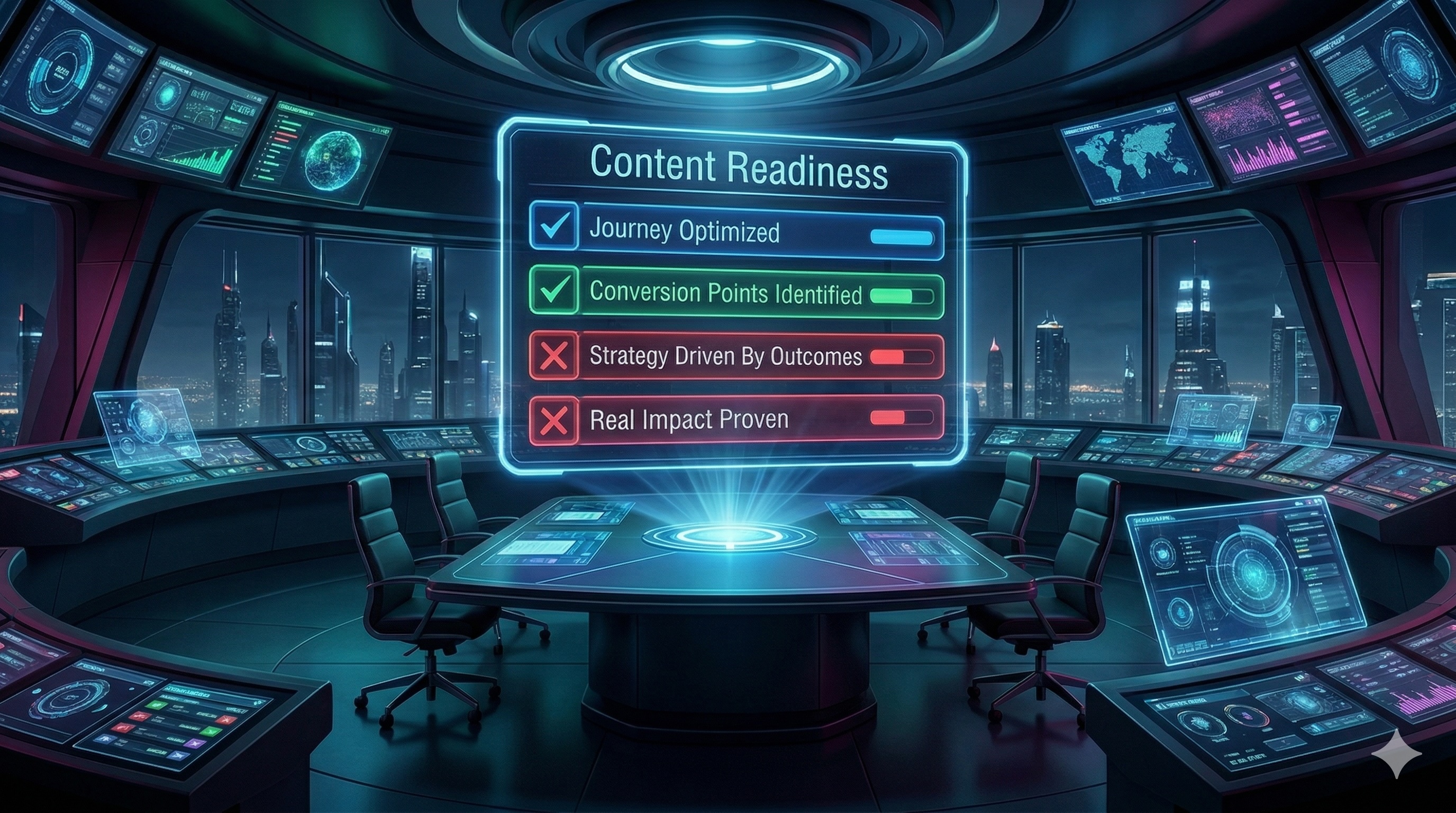
Forward-thinking marketers are already shifting their approach and asking different questions. Instead of focusing on how many users arrived, they’re asking what those users did next – and connecting content to real business outcomes. They’re using metrics that track behaviors most likely to convert, and analyzing the content and user experience that are most likely to make that conversion happen.
And they’re starting to ask deeper questions (which, conveniently like to be the questions we enjoy tackling at Knotch):
- How can a site’s content be optimized for LLM consumption in a way that helps the brand maintain control of its narrative, even for visitors who never click on a citation?
- When any page can be your homepage, how can these new “front doors” spur visitors to continue their journeys?
- What opportunities are there for new advancements in AI to create dynamic experiences for visitors based on the journeys they’re already on?
Answering these questions doesn’t require perfect data, but it does require a willingness to move beyond what’s easy to measure and toward what actually matters. That’s because the uncomfortable truth is that clicks and impressions were never designed to capture the full picture of performance. They were built for a simpler internet where discovery was visible, journeys were linear, and influence could be approximated through interaction.
That internet is gone – but the new one, in our opinion, is more exciting.
Published on April 18, 2026
Become a thought leader
Become a thought leader





Trusted by the largest (and now smartest) brands in the world.
“Before Knotch we did not understand what content was driving business results. Now we understand which content moves the needle. Knotch’s cohesive reporting and insights paint a real picture of what’s happening on our website instead of the patchwork quilt that comes from a Google Analytics approach. With Knotch we have been able to re-prioritize ad spend, route better leads to our SDR team, and inform our content development initiatives.”

"The Knotch platform ensures that we deliver high-performing content tailored to young home shoppers, enhancing their experience and driving better business outcomes.”

"Our partnership with Knotch has been highly successful, empowering us to leverage data-driven insights and refine our content strategy.”
