
Key Takeaways: What marketers are still getting wrong about personalization
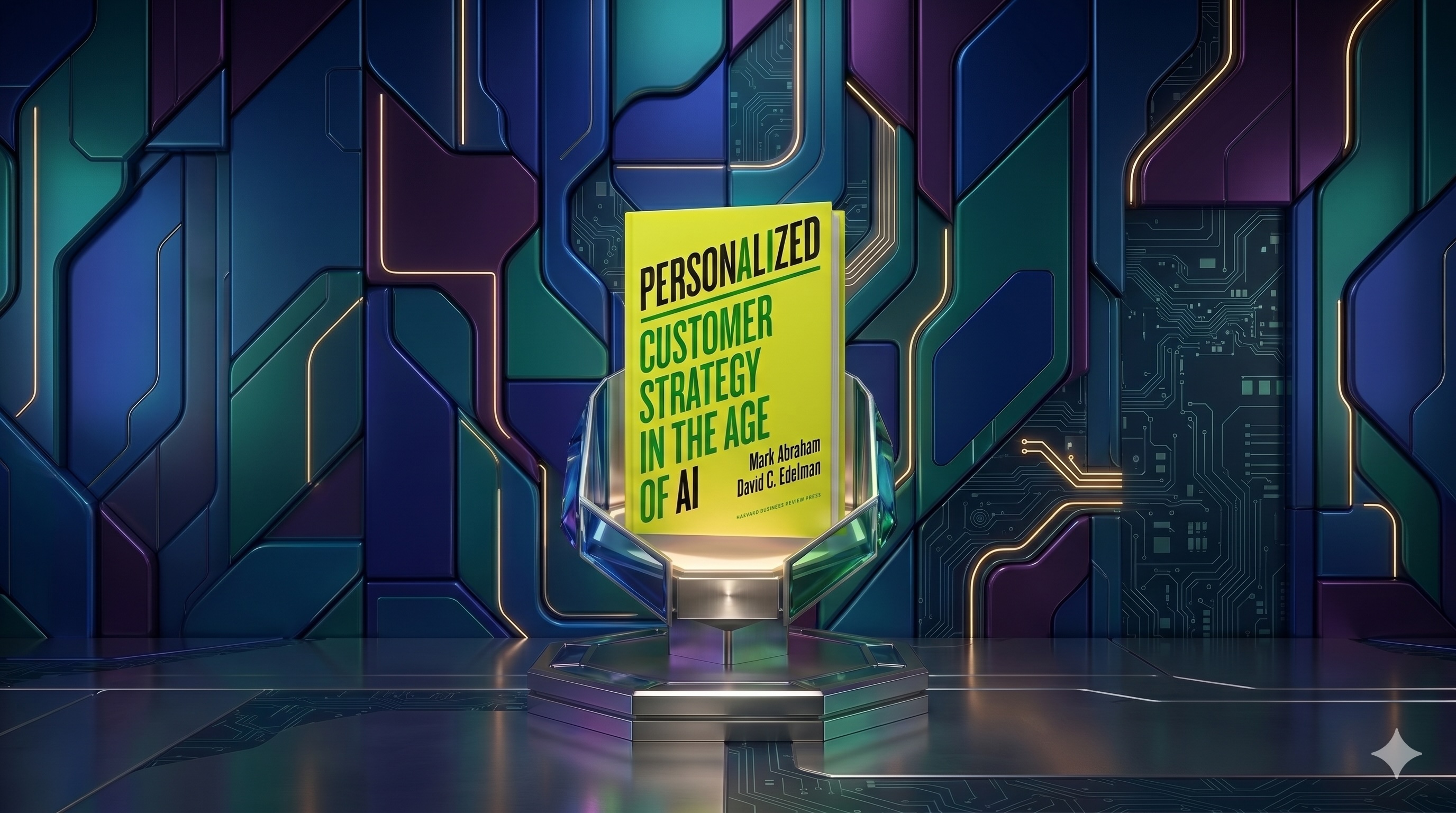
Personalization has been one of marketing’s greatest ambitions for decades – the ultimate way to reach the right person at the right time with the right message. But as marketing legend David Edelman made clear in Knotch’s latest workshop, “Relevance At Scale,” most organizations are still stuck in an outdated framework. Even though they (finally) can personalize at scale, they aren’t.
“Most companies think they’re doing personalization,” said Edelman, a Harvard Business School professor, former CMO, and co-author of Personalized: Customer Strategy in the Age of AI. “But what they’re really doing is segmentation.”
That distinction is more than a semantic one. It gets at the core problem: Personalization should be more advanced than grouping customers and tailoring messages at the margins. It only lives up to its promises when it’s a process of building systems that understand individuals in context – who they are, what they need, and when they need it – and responding in real time. Finally, this is possible, thanks to transformations enabled by AI.
Joined by Knotch co-founder and CEO Anda Gansca and SVP and Head of Strategy David Brown, the workshop with Edelman homed in on a key point: In order to make this dream of personalization happen, marketers have to change how their own architectures operate.
Here are the workshop’s most resonant takeaways.
1. Personalization involves working with an always-on system, not a set of campaigns
One of the clearest themes from the conversation was that personalization can’t live inside campaigns anymore.
“It’s not just about tailoring things to an individual,” Edelman explained. “It’s also about knowing when and how to connect with them.”
That means marketers need to move away from batch-and-blast execution and toward something much more dynamic – always-on engagement driven by signals, triggers, and behavior. It also means that they need to rethink how content is created and deployed, often in a modular or continuous flow, versus something that you “turn on” for a campaign.
The key point: Prior advancements in marketing meant adopting new tools, but adapting to true, effective personalization means that the more important change involves the operating model behind them.
2. Organizational siloes are often the reason personalization fails
If the vision is clear, the reality is messier. Siloed teams, competing KPIs, and short-term revenue pressure all push marketers toward transactional behavior (even when they know better). The result is disconnected experiences, redundant messaging, and a steady erosion of trust.
To bring this to life, David Edelman shared a simple but telling example from his own experience after purchasing a Nespresso machine.
The machine came with a hearty supply of coffee pods, but Edelman immediately began receiving emails urging him to buy more pods – even though he still had enough at home to last for months. Within days, those messages escalated into additional promotions, including offers to purchase another machine entirely.
“I just got a hundred pods,” he said. “And they kept upping the game over the next few days…It was completely irrelevant.”
The issue wasn’t a lack of data. The company knew he had just made a purchase and knew where it was shipped. They had all the signals they needed to understand his situation.
Rather, the problem was structural. Different teams that were responsible for pods, machines, and promotional campaigns were all acting independently, each optimizing for their own short-term goals. Edelman described it as multiple groups “getting [his] name on a list” and deciding it was the right moment to sell. Apparently, no one was coordinating the experience or thinking about the customer relationship over time.
“No one was looking at me as a customer,” he said.
What could they have done instead? Edelman suggested a very different approach: They could have used that moment to deepen the relationship rather than push another transaction. They could have asked how often he drinks coffee, introduced him to different blends, or set up a personalized replenishment plan.
With that strategy, they would have created value. Instead, they created noise – and ultimately risked pushing him to disengage entirely.
The key point: Personalization breaks down when organizations optimize for transactions instead of relationships.
3. While AI makes personalization possible, it can also make bad marketing worse
There’s no question that AI has changed the landscape, making personalization at scale more achievable than ever before. But it has also introduced new risks.
“There is an absolute risk of what I call the low road,” Edelman warned. That's a scenario where AI-driven personalization just leads to more content, more targeting, and more noise. In other words, AI can just as easily accelerate bad marketing as it can enable good marketing.
For many organizations, the temptation is to use AI to produce more content and reach more segments faster. But that approach leads directly to what David Brown described as a “sea of sameness” in which every brand looks, sounds, and behaves uncannily similarly. With their AI operations often trained on the same data as their competitors’, drowning in that “sea” is all too easy.
The key point: If AI is increasing output faster than it improves relevance, you’re on the low road. Instead use AI to rethink how your business creates value in the first place.
4. Content is where personalization actually happens
A recurring theme throughout the conversation was the role of content as the engine of personalization.
“Personalization lives or dies at the asset level,” Edelman said. For most brands, the product itself can’t be easily personalized; and moreover, trying to customize individual consumers’ perception of a brand can just end up eroding that brand. What can be personalized is everything around a brand – how it’s explained, contextualized, and experienced.
That requires, again, moving away from campaign-driven content toward a more expansive, utility-driven approach. Content has to cover the full range of questions, needs, and contexts that individual customers bring into their journey, especially as more of those journeys begin in AI tools. According to Knotch’s research, that figure is already at over one-third of site visitors. They’re arriving on brands’ sites having done extensive research about their own particular needs already.
As Edelman described, when brands start looking at the actual questions people are asking, it often “totally change[s] their perspective” on what content they need to create.
The key point: Brand value and consistency matter. Personalization should support how an individual visitor can form a relationship with a brand through content, but it shouldn’t get to the point of distorting the brand itself.
5. Marketers are writing for two audiences, and that creates a growing tension
Content professionals have to contend with the fact that they’re writing for a new set of site visitors: machines. “We have to acknowledge the fact that there are two audiences,” Anda Gansca said. “And both are important.”
On one side, there are human users who expect intuitive, relevant, and engaging experiences. On the other side, there are algorithms – search engines and, increasingly, LLMs – that determine whether your content gets surfaced at all.
The tension is real, because optimizing for one can easily degrade the other. Most marketers can recall many examples in their own journeys as consumers where an attempt to find information they needed led them to a page that was virtually unreadable because of how aggressively it had been tailored toward classical SEO.
“The more we optimize [only] for SEO and GEO, the worse the human experience becomes,” Gansca said bluntly. Navigating that tension is quickly becoming one of the defining challenges for modern content and marketing teams.
The key point: Visibility in LLMs is important, but you can’t lose sight of the fact that humans will also be landing on your site… and often making up their minds based on what they see.
6. Personalization is value exchange, not targeting
Amid all the discussion of data, AI, and systems, the theme stood out that personalization is ultimately about value.
“The best way I’ve found to express what personalization should achieve is to create a fair value exchange,” Gansca said.
When personalization works, it feels helpful rather than invasive. It reflects an understanding of the customer’s needs and delivers something meaningful in return. When it fails, it feels transactional or excessively “salesy.” Worse, it can feel irrelevant.
Relevance has outsize importance today because LLMs are compressing discovery and research, making it easier and faster for people to understand their options. That’s why LLM-influenced visitors are often much faster to convert, according to Knotch’s research. But LLMs are not eliminating the need for brand interaction, and that brand interaction has to be able to provide validation for that very specific visitor’s journey. If they can’t find what they’re looking for, they’ll move on.
“I use LLMs for research… but I ultimately want to validate my research,” Gansca said.
Edelman agreed, noting that while journeys are accelerating, they’re not disappearing. Customers still want to engage with brands, understand what they stand for, and feel confident in their decisions.
The key point: Is your entire website geared toward pure brand awareness? You may not be meeting the needs of AI-influenced visitors, and it may be hurting your ability to convert.
In conclusion: Personalization is a system, not a feature
The pattern is clear: personalization only works when signals, systems, and content are aligned around delivering value in real time.
In today’s marketing world, personalization isn’t a feature you can layer on top of your existing marketing strategy. It is the strategy. More specifically, it’s a system that requires new ways of thinking about content, organization, data, and customer relationships.
Or, as David Brown framed it, the industry has spent too long treating content as the output, when the future belongs to brands that treat it as the engine. That’s how they build the systems to make relevance scale.
Published on May 4, 2026
Become a thought leader
Become a thought leader







Trusted by the largest (and now smartest) brands in the world.
“Before Knotch we did not understand what content was driving business results. Now we understand which content moves the needle. Knotch’s cohesive reporting and insights paint a real picture of what’s happening on our website instead of the patchwork quilt that comes from a Google Analytics approach. With Knotch we have been able to re-prioritize ad spend, route better leads to our SDR team, and inform our content development initiatives.”

"The Knotch platform ensures that we deliver high-performing content tailored to young home shoppers, enhancing their experience and driving better business outcomes.”

"Our partnership with Knotch has been highly successful, empowering us to leverage data-driven insights and refine our content strategy.”
