
Key Takeaways: Transforming Content Structures for Talent & Technology

AI has transformed how content teams produce their work — that’s no longer debated. The more urgent question is structural: How should content teams operate in an AI-enabled world?
In Knotch’s latest workshop, “Transforming Content Structures for Talent & Technology,” John von Brachel (VP & Head of Content Lab, Novartis) and Amanda Curtin (VP of Content & Social Media, Synchrony) joined David Brown (SVP & Head of Strategy, Knotch) to explore how AI is reshaping not just output, but systems, governance, talent, and quality control.
The conversation surfaced four defining themes for marketers looking to be future-forward with their content operations. It also touched upon Knotch’s framework for a content brief that any team can use to ensure that they stay on course with the transformations to their content and operations that are inevitably underway today.
The takeaways:
1) The move from campaigns to content systems demands discipline
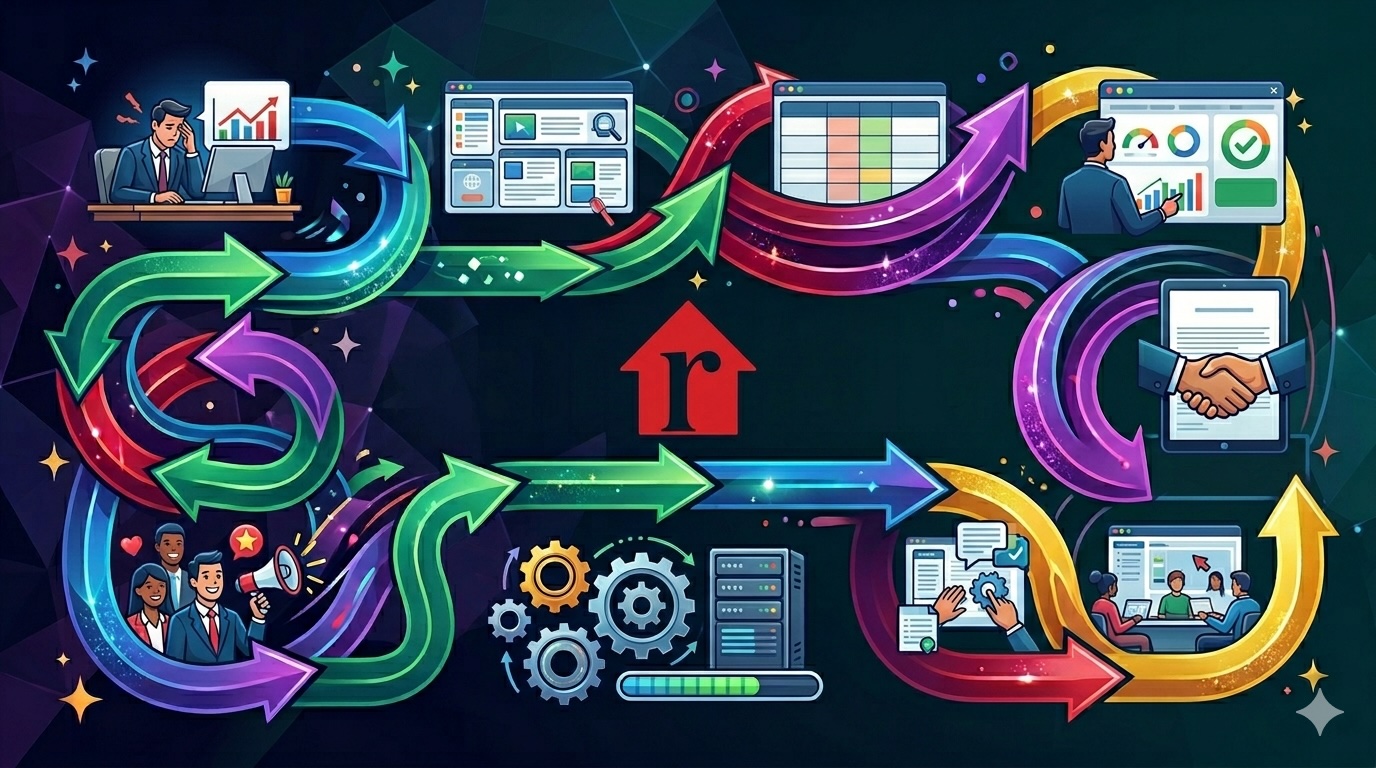
The industry has long talked about “always-on” content. But producing content nonstop isn’t the answer. The panel reframed “always-on” as designing systems that nurture relationships across the full journey.
Amanda Curtin framed it clearly:
“It’s really about taking that content to nurture relationships and carry people through.”
At Novartis, discipline is essential in a highly regulated environment where volume is neither feasible nor desirable. As John von Brachel put it:
“We like to think of ‘doing less better’ as our motto. The fewer number of assets that can have the greatest impact on patients and doctors.”
David Brown pushed the conversation further: Systems eventually take on a life of their own. The real leadership challenge is knowing when to refine, scale, or retire parts of the system. A true content system is not static, but instead continuously optimized against behavioral change and business outcomes.
The takeaway: content systems are not defined by their scale or volume. Their true architecture is structured prioritization aligned to clear objectives.
2) Organizational structure is shifting from control to influence
Neither Novartis nor Synchrony operates with tight, centralized content command structures. While this may seem on the surface to create efficiency and prevent siloing, what it can do in practice is produce blockers. Instead, the executives in Knotch’s workshop both attested that their content operations function as centers of influence.
Amanda described the risk of over-centralization:
“You can’t scale and also have tight controls. You become a bottleneck.”
John echoed that his team is built to elevate standards, influencing agency and brand teams rather than producing everything internally:
“My team is a center of influence.”
At the same time, AI is selectively re-centralizing certain functions. Derivative production and automation-heavy workflows benefit from standardized platforms. Strategy, behavioral insight, and big ideas remain distributed.
John reinforced that structural consistency enables automation. When Novartis reduced more than 70 planning processes down to one unified framework, it went beyond creating alignment and planted the seeds necessary for AI to operate effectively.
The lesson is that governance and empowerment must coexist. Influence scales better than control.
3) AI raises the bar for quality — and the brief is more important than ever
AI solves the scale problem. It simultaneously creates a quality crisis.
Amanda cautioned:
“It’s not about, ‘Great, I can create 50 new pieces of content today.’”
John emphasized standards in regulated industries:
“We won’t put anything in market that isn’t authentic… Have standards. Work with your legal department on that.”
David Brown added a critical perspective that reframed the conversation: In moments of uncertainty, quality comes back to the brief. Referencing his early experience working with industry legend David Ogilvy, he noted that when work isn’t good enough, you return to the brief. And in today’s AI environment, the brief becomes even more essential.
A strong brief forces clarity around:
- Audience insight
- Business objective
- Desired behavior change
- Single-minded strategy
Without that clarity, prompts drift – output fragments, and quality suffers.
Knotch’s new content brief template formalizes this discipline, ensuring that content aligns to strategy as well as production efficiency, whether it’s human- or AI-generated.
In an AI world, the brief is not paperwork; it is quality control.
4) Relevance, discoverability, and leadership define the next frontier
Personalization often gets overused as a buzzword. The panel offered a more practical framing: Focus on relevance. Amanda highlighted AI’s potential for intelligent versioning and testing:
“You could start small… find distinct differences in audience segments and test it from there.”
John suggested that when marketers talk about personalization in its ideal form, what they really mean is journey-based relevance:
“We think of relevance more importantly than the word personalization… maintaining relevance through their journey.”
David expanded that relevance now extends beyond owned channels. As LLMs increasingly influence discovery, content leaders must monitor citation visibility, share of voice, and how content performs before audiences even arrive on the site.
But this transformation is a human one, not a purely technical process. While AI transformation is exciting, it can be simultaneously overwhelming. To that end, John offered a reminder about leadership in moments of change:
“Your teams are going to be overwhelmed… give them guidance. Let them breathe.”
And perhaps the simplest directive of the session:
“Stay curious… be the person who asks too many questions.”
Amanda echoed that experimentation is part of the opportunity:
“There really hasn’t been a time like this where you just don’t know what’s going to happen next.”
The competitive edge in this era doesn’t necessarily come from having the most cutting-edge technology. Even the most pioneering software can’t thrive without disciplined systems, empowered teams, structured quality, and curious leadership.
Bottom Line
AI is reshaping how content teams operate, how insights travel, how systems scale, and how standards are enforced.
The organizations that win will:
- Operate through disciplined content systems
- Structure teams as centers of influence, not bottlenecks
- Treat the brief as the anchor of quality
- Use AI to accelerate human judgment, not bypass it
- Lead with curiosity through transformation
And as John von Brachel put it, five years from now we’ll all be telling stories about what it meant to build content systems in 2026 – and we’ll be marveling at how much has changed since then.
Published February 20, 2026
Become a thought leader
Become a thought leader







Trusted by the largest (and now smartest) brands in the world.
“Before Knotch we did not understand what content was driving business results. Now we understand which content moves the needle. Knotch’s cohesive reporting and insights paint a real picture of what’s happening on our website instead of the patchwork quilt that comes from a Google Analytics approach. With Knotch we have been able to re-prioritize ad spend, route better leads to our SDR team, and inform our content development initiatives.”

"The Knotch platform ensures that we deliver high-performing content tailored to young home shoppers, enhancing their experience and driving better business outcomes.”

"Our partnership with Knotch has been highly successful, empowering us to leverage data-driven insights and refine our content strategy.”
