
Can AI finally fulfill the promises of personalization?
Why have the promises of “personalization” consistently failed to materialize? How do marketing leaders contend with the way AI is shaping not just their work, but the entire structure of their teams? And what really is the role of websites today?
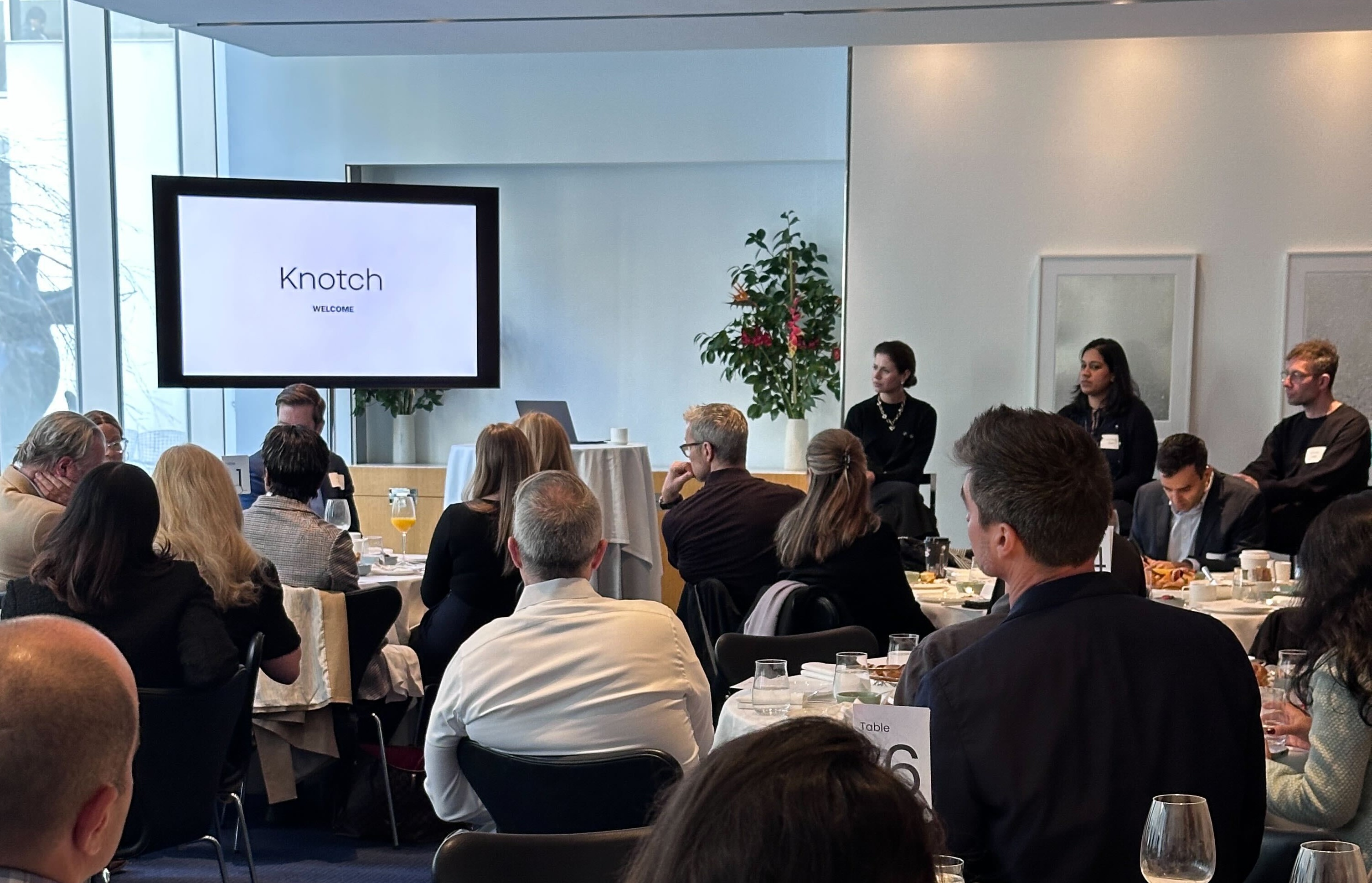
Those were some of the questions tackled by an intimate set of senior brand leaders gathered over breakfast in midtown Manhattan for Knotch’s latest event, “Personalization and the Invisible Journey.” The aim of the event was to discuss how AI is reshaping the digital customer journey – and what that means for the future of the website.
While much industry conversation today focuses on zero-click experiences and AI assistants, this discussion – in which Knotch co-founders Anda Gansca and Aron Tzimas were joined by Sanya Makhani, director of marketing technology at Google – highlighted a different perspective. While websites aren’t disappearing, their purpose, structure, and role in the journey are evolving quickly.
Here are five key learnings from the conversation:
- Websites still matter, but their role is changing.
The group challenged the narrative that AI will eliminate the need for websites. But while sites’ role in the audience journey isn’t disappearing, it’s transforming. While visitors may begin their discovery in an LLM, search engine, or social platform, they still rely on a brand’s website to validate what they’ve learned, understand the brand more deeply, and ultimately make a decision. As Anda Gansca put it, “the journey isn’t becoming zero-click. It’s just becoming more fluid.” Tracking that journey requires intricate, real-time content intelligence to stay on point in a fast-changing world. - Websites must now balance two audiences: humans and AI agents.
One of the central themes of the discussion was that modern websites increasingly need to serve both people and machines. This demands a careful balance. AI agents require structured information that can be easily retrieved and interpreted; human visitors expect intuitive navigation, compelling brand storytelling, and a seamless experience. Many brands are currently focusing heavily on making their sites more readable by LLMs, but the group emphasized that doing so should not degrade the experience for human users. The challenge moving forward will be designing sites that deliver structured information for machines while still creating engaging, conversion-oriented experiences for people. - Personalization is becoming more real-time and conversational.
Personalization has long been a promise in digital marketing, but it has often relied on static rules and imperfect assumptions about user intent. And, as the group admitted, no one’s really nailed it. But AI is now creating the potential for something different: experiences that adapt dynamically within a session. Rather than guessing once and hoping it works, systems can adjust in real time based on explicit signals from users. This shifts personalization closer to an interactive dialogue, in which content and experiences evolve as the visitor clarifies what they actually need. - AI can accelerate marketing work, but it is not replacing human judgment anytime soon.
The group also discussed the growing pressure many organizations face to automate more of their marketing tasks with AI, often under budget pressures from company leadership and corporate boards. While the technology is already proving useful for tasks like generating variations, speeding up research, and supporting experimentation, it still struggles with brand nuance, editorial judgment, and compliance. For now, human oversight remains essential – particularly in industries where trust, tone, and accuracy are critical. - Content may need to be “atomized” to work in AI-driven environments.
Another major shift discussed was the extent to which content itself will need to be structured and tagged differently in order to perform in a way that drives outcomes – because AI visibility alone lacks usefulness if it doesn’t push visitors toward a conversion. Traditional websites store information as full pages or articles, but AI systems often need smaller, clearly defined units of knowledge. By breaking content down into smaller components (say, “atoms”), brands can tag, organize, and retrieve specific pieces of information more effectively. This makes it easier for AI agents to understand and use the content while also enabling more dynamic personalization and content assembly for human visitors.
The bottom line is that AI is transforming how people discover and interact with brands online, but it does not eliminate the role of the website. Instead, it raises the bar for what websites need to be. They now face a mandate to behave less like static collections of pages and more like intelligent environments that can adapt to both human and machine visitors, with a focus on conveying the exact knowledge that both are looking for in the format that they want it.
Published on March 10, 2026
Become a thought leader
Become a thought leader







Trusted by the largest (and now smartest) brands in the world.
“Before Knotch we did not understand what content was driving business results. Now we understand which content moves the needle. Knotch’s cohesive reporting and insights paint a real picture of what’s happening on our website instead of the patchwork quilt that comes from a Google Analytics approach. With Knotch we have been able to re-prioritize ad spend, route better leads to our SDR team, and inform our content development initiatives.”

"The Knotch platform ensures that we deliver high-performing content tailored to young home shoppers, enhancing their experience and driving better business outcomes.”

"Our partnership with Knotch has been highly successful, empowering us to leverage data-driven insights and refine our content strategy.”
